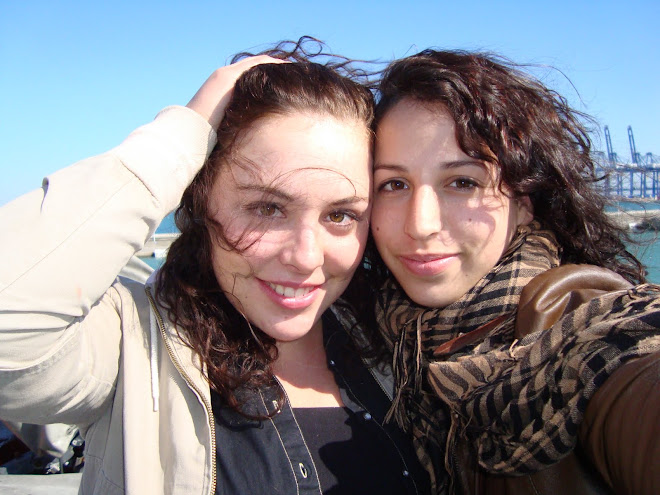
Our last night was a bitter sweet one: with the end of one adventure, came the beginning of another and also the arrival of Lindi’s mother. After we picked auntie Susan up at the airport and booked her into her hotel, we give her a grand night tour of Sevilla. Pretty city lights and a couple of vodka later, we join our friends one last time and head of to bed: tomorrow, nice and early, begins The Road Trip to eventually take us to Salamanca.caramelos
The Route of The Road Trip:
Granada - Cordoba - Merida - Salamanca
DIA UNO: First pit stop takes places at the side of the road, at some cafeteria, that looks a bit like the dining hall of a student residence, but where everything claims to be caseros – home made. And boy, do we dig into a meal of salad, fish, pureed potatoes and cookies that almost gives you the feeling that your own mother is spoon feeding you the Sunday lunch that she has been working on for two days straight with her fragile, loving little hands. It was gooooooood.
As we continue – Lindi and I not having to drive, in the magies vol, ogies toe fashion – the Spanish countryside folded out before us (in the moments that we were awake): luscious green fields, hundreds of energy brewing wind mills, small towns and run down churches. Before we know it, we have arrived at the place we shall rest our heads for the first evening.
That night we were treated to a guided city tour of Granada. We drive up windy, quaint little cobblestone roads, so narrow, you almost wouldn’t dare to walk there. We came to a halt, somewhere with a high altitude, and enjoyed the breath taking view that surrounded us. Granada lay before us like an ocean of warm, glowing lights and a vibrant bustle that even warmed our freezing little snouts from it’s distance. We then walk back to somewhere with a less significant altitude and were led to a cave-like looking place where we are served the best sangria in town and also watched an enigmatic and passionate Flamenco show. The lights were dimmed and the beauties and the arrogants took over the stage in a heated fashion – chests out, hands flaying, their feet feverishly tapping out beats that almost clash with those of the drum and guitar, all this with fixed expressions.
DIA DOS: Yet again, we get up early, chow a quick breakfast of sarmies al estillo de Espana and hop into a bus, that will this morning take us to pay a tribute to the Alambra – the Arabian palace situated in Granada, very famous, but not very pretty from the outside. Many hours, longs walks and a lot of historical facts later, our lives have basically been changed by the beauty and utter mystery of what we just experienced: to try and explain the detail - though, the word detail does not even have quite the accurate ring to it - of the gardens and rooms, will take up a couple of books’ pages. As we moved slowly, through all the intricate arches, over hand-painted tiles and up and down levels of ancient art, one could feel a certain sacredness almost resting one’s shoulder.
All too soon, we have to return to the real world and continue on the long road. The next treat, however, was not far away and the next pit stop was to be had in the city of Cordoba – home to the Mezquita. During dark and stormy times is Spain, when religion once again played puppeteer to the unruly storms, the Catholics decided to take over the mosque in Cordoba and transform it into a Cathedral. Thus, on the outside, the building merely looks like the same old, same old, but inside, alongside with typical Catholic nooks of Jesus or other dramatic and over the top artworks and stuff, can be seen the distinct flavour of Muslim architecture. Needless to say: amazing.
Finally we arrive in Merida, in for another round of magic.
DIA TRES: We trek through the little town of Merida, passing roman aqueducts locals carrying boxes of sweet-smelling churros and interesting little music shops, brunch on queso Manchego doused with olive oil, salad and coffee and resume along the roman paths where we quickly get sucked even further into a centuries’ old empire: a gladiator arena, theatre area, typical roman house (complete with mosaic floors) as well as captivating marble statues of gods and goddesses.
We stop for a divine lunch which we are served by a friendly, stocky Spaniard, of revuelto (scrambled eggs tossed with exotic mushrooms), mixed salad, fried fish and marinated tomatoes and a long copa of vino tinto, before we carry on to our end-destination, waving goodbye to the Romanesque palaces of our ancestors, the next stop forming the next chapter packed with Spanish tomatoes.
Friday, February 11, 2011


The Sevillian Train Passes. . .
To our great dismay, Lindi and I arrived at the last week of the glorious fun in the sun to be had in the city of oranges. In our last attempt to grasp and sample the city’s majesty and ambience, we drew up a to-do list of the things that still needed to be done:
1. Visit the hippy city of Cadiz on the Costa del Sol
2. Try on as many of the flamboyant and extravagantly expensive Flamenco dresses (or trajes) – the Fiesta de Primavera (Spring festival) is soon to grace the streets of Sevilla and to dress up, watch Flamenco shows and drink in tents will be the order of the day
3. Visit the Alameda de Hercules (historical site in Seville) in the Macarena suburb
4. Go for paddle on rio of the city, cocktail in hand
5. Laze around in the breath taking gardens, El Parque de Maria Luisa, of Seville
So, one Saturday morning, rising early from our beds we attempt to catch the morning bus to head on to the sunny side. Karin, our German freundin, also tags along to help us make a start to the list. The day sweeps past in a blur of great food (lunch being an enormous plate of fish, adobo style, and grilled peppers topped with coarse sea salt) good company, sea air, an educating walk-about the city and ending, lazily, on the beach with an ice-cream cone of fig, rose water and naartjie in hand. It really is like a big Kalkbay exploded on the coast of Spain. Everyone just seems to concentrate on breathing in the good air as they glide past in floaty pants and dreadlock coifs.
As we procrastinate leaving the side of these fearless hobo’s, we at least sweeten the deal on arrival in Sevilla, by buying candy floss sticks the size of our heads!
The next day, Tessa (one of our Dutch friends), Karin and we swing by some ridiculously over-priced stores, to see just how Spanish we could be in the traditional Spring trajes. One would never say it, but these things are incredibly small and tight.
Lindi and I then take a stroll down to the Alameda to go and look at this famed and spectacular ruin of Sevilla. It ends up being a pile of old rocks stacked on each other, with some mythological God posed on top, at both ends of what looked like an old running trek. However, the true magic of this square in the Macarena suburb, comes from the interesting and different people prancing around, as well as from the vibey, divergent, alternative cafés that seem to have blossomed all over the place and hug the arena. And just to prove to ourselves that we actually don’t care that we don’t fit into these preposterous dresses, we treat ourselves to a decadent lunch at Casa Paco, of stuffed baby marrows, blanketed in melted cheese, a marinated salmon tapa and home baked brown bread brushed with a touch of cinnamon, topped with ham and drizzled with cumin olive oil.
We manage to waffle through the other activities and all too soon, the last night arrives.
In true South African style – or rather, in true Afrikanie style – we ceremoniously greet Sevilla with a braai (we scavenged stokkies and leaves from a river bank near our flat and trekked it into the Centre City in backpacks; we even stopped at the Chinese shop to buy a 3 euro roster). Little did we know, however, that the braai we were busy setting up, was an illegal one, as two Spanish oaks kindly informed us – seeing that it was on public property, next to the Guadalquivir rio and directly opposite a small police station.
Nevertheless, we carried on with our barbacoa, roasting chicken strips and bits of bread on the open flames, beneath the not-so-starry Sevillian sky.
With a last Salud! with glass of Tempranillo, all our international maaitjies and teary smiles, we say cheers to the wistful surroundings and our beloved casa. . .
1. Visit the hippy city of Cadiz on the Costa del Sol
2. Try on as many of the flamboyant and extravagantly expensive Flamenco dresses (or trajes) – the Fiesta de Primavera (Spring festival) is soon to grace the streets of Sevilla and to dress up, watch Flamenco shows and drink in tents will be the order of the day
3. Visit the Alameda de Hercules (historical site in Seville) in the Macarena suburb
4. Go for paddle on rio of the city, cocktail in hand
5. Laze around in the breath taking gardens, El Parque de Maria Luisa, of Seville
So, one Saturday morning, rising early from our beds we attempt to catch the morning bus to head on to the sunny side. Karin, our German freundin, also tags along to help us make a start to the list. The day sweeps past in a blur of great food (lunch being an enormous plate of fish, adobo style, and grilled peppers topped with coarse sea salt) good company, sea air, an educating walk-about the city and ending, lazily, on the beach with an ice-cream cone of fig, rose water and naartjie in hand. It really is like a big Kalkbay exploded on the coast of Spain. Everyone just seems to concentrate on breathing in the good air as they glide past in floaty pants and dreadlock coifs.
As we procrastinate leaving the side of these fearless hobo’s, we at least sweeten the deal on arrival in Sevilla, by buying candy floss sticks the size of our heads!
The next day, Tessa (one of our Dutch friends), Karin and we swing by some ridiculously over-priced stores, to see just how Spanish we could be in the traditional Spring trajes. One would never say it, but these things are incredibly small and tight.
Lindi and I then take a stroll down to the Alameda to go and look at this famed and spectacular ruin of Sevilla. It ends up being a pile of old rocks stacked on each other, with some mythological God posed on top, at both ends of what looked like an old running trek. However, the true magic of this square in the Macarena suburb, comes from the interesting and different people prancing around, as well as from the vibey, divergent, alternative cafés that seem to have blossomed all over the place and hug the arena. And just to prove to ourselves that we actually don’t care that we don’t fit into these preposterous dresses, we treat ourselves to a decadent lunch at Casa Paco, of stuffed baby marrows, blanketed in melted cheese, a marinated salmon tapa and home baked brown bread brushed with a touch of cinnamon, topped with ham and drizzled with cumin olive oil.
We manage to waffle through the other activities and all too soon, the last night arrives.
In true South African style – or rather, in true Afrikanie style – we ceremoniously greet Sevilla with a braai (we scavenged stokkies and leaves from a river bank near our flat and trekked it into the Centre City in backpacks; we even stopped at the Chinese shop to buy a 3 euro roster). Little did we know, however, that the braai we were busy setting up, was an illegal one, as two Spanish oaks kindly informed us – seeing that it was on public property, next to the Guadalquivir rio and directly opposite a small police station.
Nevertheless, we carried on with our barbacoa, roasting chicken strips and bits of bread on the open flames, beneath the not-so-starry Sevillian sky.
With a last Salud! with glass of Tempranillo, all our international maaitjies and teary smiles, we say cheers to the wistful surroundings and our beloved casa. . .
Thursday, January 27, 2011
Me gusta Semana Santa, me gustas tu. . .

Although Easter fever has long ago subdued, the memory of the Spanish catholic way of celebrating it, is still fresh in our memories: incense, crowds of people, window displays of The Virgen and fresh flowers in every shop; red banners flowing lazily from balconies in the City Center, women traditionally dressed in black and lace, the streets decked out with chairs (that can cost up to 200 euros for the week per person to save your cushion). And the little Clu Clax men! Dressed in shades of purple, blue, white, black, green and red - depending on which church the dressed belongs to. Some historical trivia on this phenomenon: the reason for these dodgy attires have nothing to do with the rude American history, but is an all catholic tradition in presenting yourself during the Easter season: it creates an oppurtunity for equality amongst the churchgoers of long ago (where being religious did not get you into the popular group, but quite the opposite - dead). Apart form hiding their identities as well, the pointy hats make everyone appear the same lentgh. It also signifies a closer connection to God. Bare feet make it's appearance every so often too, to manifest humility and humbly try to attempt to experience some of the pain that Jesus went through. Instead of carrying swords, the paraders carry enormous wax candles or baskets of pungent incense. The order of events is thus (for lack of a better expression) the Clu Clax men, a mobile display of either Mary or Mary and crucified Jesus, some more Clu Clax men, a brass instrument orchestra, another display of Mary (soldiers sometimes also make their appearance in silver and gold). And yes, these structures are of solid gold and silver and therefore need about fifty pax to lift and carry them around at, well. . . very slowly. Usually, all this madness continues for one whole week, starting on a Sunday and ending on the Sunday to follow, the Thursday being the most important day. Yet another excuse for the Sevillanos to not work and spend their time crowding the streets. Although, those past the age of just being piss cats, do take Semana Santa (saint week) very seriously and sometimes men, caught up in a moment of passion and spontanaiety, serenade the parade coming by. A serenade like no other; one that leaves you with chattering teeth, goose bumps up to your nail cuticles and watery eyes, wanting more. You know you were just part of an inexplicable spiritual moment. Have a listen to this. . .
Everything for a Reason
Freshly back in the hood of orange blossoms and no-work mentality, our ears still suffering from bomb shock, we have to start being dilligent right away: the first exam is upon is. That means we have to start studying. A lot. Yup, it's not all la vida loca down in the south. Did we mention we are bearly able to speak Spanish yet?
Besides, on our way back from the Estacion de Sevilla to the street where we lived we got ripped off proper tourist style, having to pay 18 euros for a ride we paid 7 euros for the previous trip. So, who really wants to learn how to speak the language of such vile, old and polluted and disagreeable latin farts?
We do.
But, not because we want to - at this moment - but because we have to. We feverishly jump in, unwillingly, for the sirens of the city are calling and being cooped up in our Triana cage. . . not so much fun. Well, half of us end up jumping in feverishly. The other party ends up gallivanting with a certain latin stukkie.
Day of, silence looms over our heads like a gloomy haze. We sip our morning coffee in the quiet. Our walk to the school: silent. We enter the classroom and merely give our alma mater a nodd of the heads. The morning proceeds in utter seriousness; everyone trying to cram a few more verbs into their heads.
And then It is placed in front of us. And It doesn't look so bad. It actually turns out to be pretty do-able.
And you step outside and the rest of the people aren't wearing a fat smile like you are and you know: shit. It was actually an epic fail. You just seemed to some how be the one to miss out on that detail.
Ah well, we team up and all go and try to find the right answers in big glasses of Limoncello in our favourite little bar and profoundly discuss matters of the world in a language that we do know. We make a pit stop at our Triana palace for a budget meal of tuna pasta and a quick (2 hour) siesta. Back on the streets,we meet up with the gang for a stroll and stumble across a breathtaking shisha bar. It was like something from a Morrocan cult movie, set in the 1930's about the Spanish mafia hanging out and playing cards, where everyone talks in code and sips mata - if there where to be a movie like that, of course. Complete with sweet-smelling smoke dancing through the air, authentic lamps, hand carved, dark wooden tables and cushions that call each and everyone that walks through the door's individual name.
We end up with two human sized hookahs: one filled with aniseed liqueur and apple molasses; the other, good old water and orange flavour.
In an instant, our love affair with this place continues. Who could be so utterly vile to call them silly farts?
Besides, on our way back from the Estacion de Sevilla to the street where we lived we got ripped off proper tourist style, having to pay 18 euros for a ride we paid 7 euros for the previous trip. So, who really wants to learn how to speak the language of such vile, old and polluted and disagreeable latin farts?
We do.
But, not because we want to - at this moment - but because we have to. We feverishly jump in, unwillingly, for the sirens of the city are calling and being cooped up in our Triana cage. . . not so much fun. Well, half of us end up jumping in feverishly. The other party ends up gallivanting with a certain latin stukkie.
Day of, silence looms over our heads like a gloomy haze. We sip our morning coffee in the quiet. Our walk to the school: silent. We enter the classroom and merely give our alma mater a nodd of the heads. The morning proceeds in utter seriousness; everyone trying to cram a few more verbs into their heads.
And then It is placed in front of us. And It doesn't look so bad. It actually turns out to be pretty do-able.
And you step outside and the rest of the people aren't wearing a fat smile like you are and you know: shit. It was actually an epic fail. You just seemed to some how be the one to miss out on that detail.
Ah well, we team up and all go and try to find the right answers in big glasses of Limoncello in our favourite little bar and profoundly discuss matters of the world in a language that we do know. We make a pit stop at our Triana palace for a budget meal of tuna pasta and a quick (2 hour) siesta. Back on the streets,we meet up with the gang for a stroll and stumble across a breathtaking shisha bar. It was like something from a Morrocan cult movie, set in the 1930's about the Spanish mafia hanging out and playing cards, where everyone talks in code and sips mata - if there where to be a movie like that, of course. Complete with sweet-smelling smoke dancing through the air, authentic lamps, hand carved, dark wooden tables and cushions that call each and everyone that walks through the door's individual name.
We end up with two human sized hookahs: one filled with aniseed liqueur and apple molasses; the other, good old water and orange flavour.
In an instant, our love affair with this place continues. Who could be so utterly vile to call them silly farts?
Monday, March 29, 2010
Las Fallas: Valencia, Weekend the Fifth
The night before: out, having a good time our usual spot (The Buddah Bar), being very tranquilo, saying farewell to yet another friend and all is going to be well tomorrow.
07:30 - We get up, shower, eat, still very mellow, catch a cab to the train station, get there, go to the platform and say farewell to our train, this time, rolling out the station.
Swearing and stomping our feet, missing the train by a mere 2 minutes, we set off to buy another ticket to get to Cordoba, high speed, and change to our actual ride.
17:00 - Arrive in Valencia. As we steam through the city, we already sight some of the colourful, strange Fallas. Quick pitstop at the flat we were staying at and we meet up with a local friend (Miguel) that graciously took it upon himself to act as our tourguide.
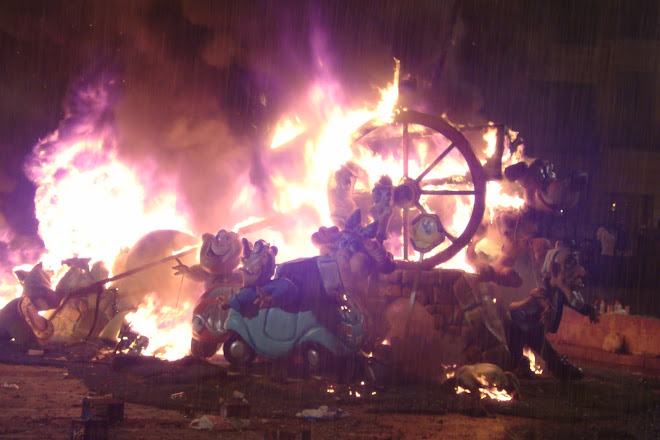
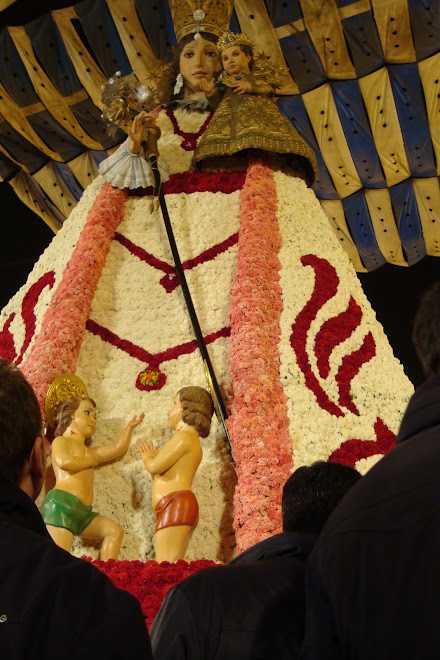
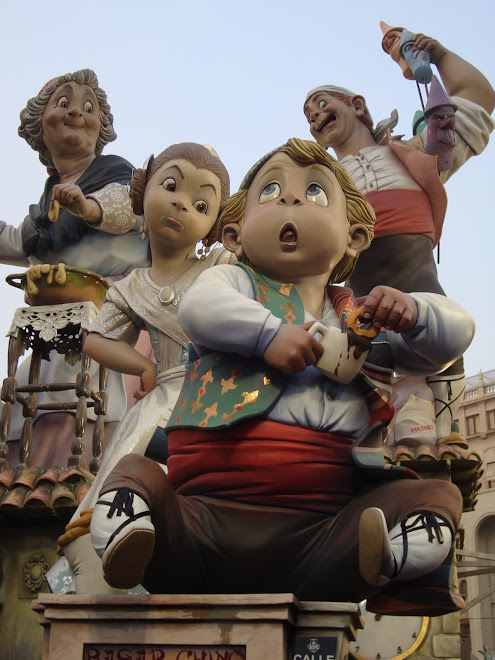
Definition of the annual fiesta: Grand, obscene wooden structures, designed by various artists, painted and decorated to perfection and set aligght by the Fallarita Mayor (basically the richest girl in town, dressed in rich fabrics and jewelry, that ascts as the face of the festival for the week) to burn down with loud crackles of fire and crackers, each in it's turn.
Theme of Fallas 2010: Satire of various celebrities and political figures.
Duration: One week. Starting on the 15th until the 19th of March.
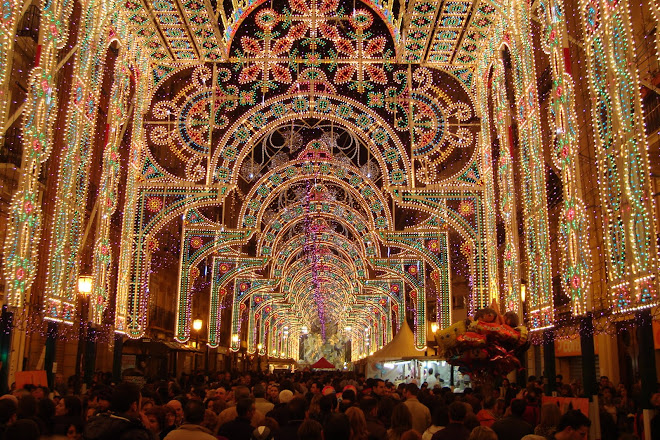
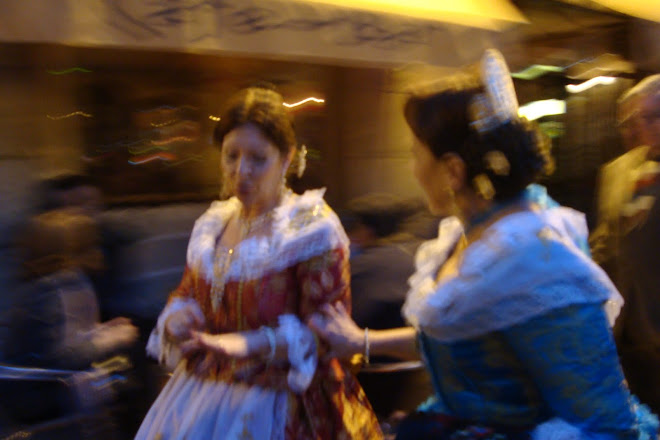
What to expect: lots of parties, Agua de Valencia (mixture of Cava, Vodka and orange juice), screaming, fireworks, bunelos (little fried cookies made of pumpkin, served with icing sugar), labyrinths of people, Fallaritas Minoras in traditional festive clothing parading around and overall madness.
After all the excitement and radical sighthings, the rest of the weekend was spent leisurely exploring the great city. We made a visit to well-known buildings, the spectacular old part of the city and an awesome Science Museum. There Cesare Pavese taught us that "the richness in life, lies in the memories we have forgotten."
Salud.
07:30 - We get up, shower, eat, still very mellow, catch a cab to the train station, get there, go to the platform and say farewell to our train, this time, rolling out the station.
Swearing and stomping our feet, missing the train by a mere 2 minutes, we set off to buy another ticket to get to Cordoba, high speed, and change to our actual ride.
17:00 - Arrive in Valencia. As we steam through the city, we already sight some of the colourful, strange Fallas. Quick pitstop at the flat we were staying at and we meet up with a local friend (Miguel) that graciously took it upon himself to act as our tourguide.
Definition of the annual fiesta: Grand, obscene wooden structures, designed by various artists, painted and decorated to perfection and set aligght by the Fallarita Mayor (basically the richest girl in town, dressed in rich fabrics and jewelry, that ascts as the face of the festival for the week) to burn down with loud crackles of fire and crackers, each in it's turn.
Theme of Fallas 2010: Satire of various celebrities and political figures.
Duration: One week. Starting on the 15th until the 19th of March.
What to expect: lots of parties, Agua de Valencia (mixture of Cava, Vodka and orange juice), screaming, fireworks, bunelos (little fried cookies made of pumpkin, served with icing sugar), labyrinths of people, Fallaritas Minoras in traditional festive clothing parading around and overall madness.
After all the excitement and radical sighthings, the rest of the weekend was spent leisurely exploring the great city. We made a visit to well-known buildings, the spectacular old part of the city and an awesome Science Museum. There Cesare Pavese taught us that "the richness in life, lies in the memories we have forgotten."
Salud.
Tuesday, March 23, 2010
“Summer time, . . .”
(and the living is Spanish)
Another stroke of luck we forgot to mention: since we have arrived it has not deceased raining. Seville is situated south of Spain, near the equator and therefore usually has great rays of sun that bless the city around this time of the year. Friend Murphy decided to bless us with great showers of rain drops - for the first time in 60 years.
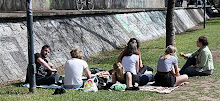
On the 15th of March we did, however, see some of that glorious sun. After school, we headed down to the river that crawls through the city dividing the centro of Sevilla from Triana (the neighbourhood where we live that can be compared to a uptown Kuilsriver), with all our international friends: Thomas (Brittish, 27), George (Brittish, 23), Linnea (Swedish, 18), Paparazzi Pablo (American, 69), Maripol (Dutch, 24), Jorinde (Dutch, 19), Karlijn (Dutch, 23), Karin (German, 19), Karina (German, 22). Like true locals, we soaked up the heat (or took del sol, directly translated), enjoying the most popular and widely sold brand of red and white wine sold in Spain. Did we mention, also the cheapest, at £1,10 for a litre (Don Simon).
Robertsons better pull up their socks.
Tinto de Verano, a standard summer drink in Spain - that consists of red wine and lemonade - was also eagerly consumed. The day did not pass without the casual visit if a hobo or two and as we were sitting around laughing, another charming toothless dronkie came by and toasted a swig with us of the same label of Verano we were drinking!
Those who do not snatch themselves a seat on the riverbank, opt for a jog or a bike ride to make use of the sun. And whatever these people do, no matter how much they exercise, drink or smoke (and boy, do they smoke a heck of a lot: in the morning, on the streets, in restaurants; while eating and drinking, when not eating and drinking; before siesta, after siesta; taking the dog for a walk, or accompanying a kiddie to the playground; grandmother and granddaughter having a puff together and you will even find an ashtray in some bathrooms), they always smell delicious. Their hair also never seems to frizz – this is honestly a frizz-free-hair nation. Maybe, that is because they spend all their hours concentrating on everything, besides working – typical Andalucian style.
Besides, with the orange tree in full blossom, their rich scent clouding the streets, who want to work anyway?
Another stroke of luck we forgot to mention: since we have arrived it has not deceased raining. Seville is situated south of Spain, near the equator and therefore usually has great rays of sun that bless the city around this time of the year. Friend Murphy decided to bless us with great showers of rain drops - for the first time in 60 years.
On the 15th of March we did, however, see some of that glorious sun. After school, we headed down to the river that crawls through the city dividing the centro of Sevilla from Triana (the neighbourhood where we live that can be compared to a uptown Kuilsriver), with all our international friends: Thomas (Brittish, 27), George (Brittish, 23), Linnea (Swedish, 18), Paparazzi Pablo (American, 69), Maripol (Dutch, 24), Jorinde (Dutch, 19), Karlijn (Dutch, 23), Karin (German, 19), Karina (German, 22). Like true locals, we soaked up the heat (or took del sol, directly translated), enjoying the most popular and widely sold brand of red and white wine sold in Spain. Did we mention, also the cheapest, at £1,10 for a litre (Don Simon).
Robertsons better pull up their socks.
Tinto de Verano, a standard summer drink in Spain - that consists of red wine and lemonade - was also eagerly consumed. The day did not pass without the casual visit if a hobo or two and as we were sitting around laughing, another charming toothless dronkie came by and toasted a swig with us of the same label of Verano we were drinking!
Those who do not snatch themselves a seat on the riverbank, opt for a jog or a bike ride to make use of the sun. And whatever these people do, no matter how much they exercise, drink or smoke (and boy, do they smoke a heck of a lot: in the morning, on the streets, in restaurants; while eating and drinking, when not eating and drinking; before siesta, after siesta; taking the dog for a walk, or accompanying a kiddie to the playground; grandmother and granddaughter having a puff together and you will even find an ashtray in some bathrooms), they always smell delicious. Their hair also never seems to frizz – this is honestly a frizz-free-hair nation. Maybe, that is because they spend all their hours concentrating on everything, besides working – typical Andalucian style.
Besides, with the orange tree in full blossom, their rich scent clouding the streets, who want to work anyway?
Sunday, March 21, 2010
Back on Home Ground. . .
Whenever I hear the word Kontiekie Toer, my throat seems to refrain from breathing, my heart starts pounding faster and I see visions of middle aged people with snowy white skin walking around in sandals and socks in the streets of some obscure little town and frowning at possibly everything they see around them, utterly bored and fed up. When those two words popped up, however, on the weekly cultural program of our language school, proposing a very exotic trip to Morocco, we gave each other one sly smile and decided it was an offer that we can not miss out on.
Off we treaded the next day to the Moroccan embassy, because even though we are from the same continent as our end destination, our South African passports mean squat. After a session of broken Spanish on our side and poor English on the lovely woman from the embassy’s side, we walked out about a half an hour later with two visas to visit the land of mint tea and hookah pipes. (Not even Germany delivers such good service!)
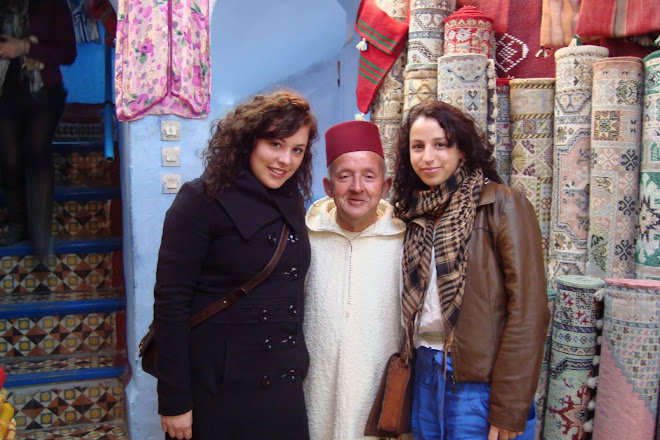
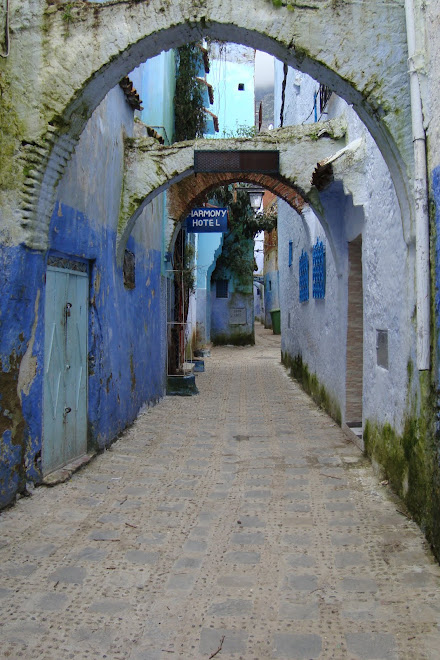
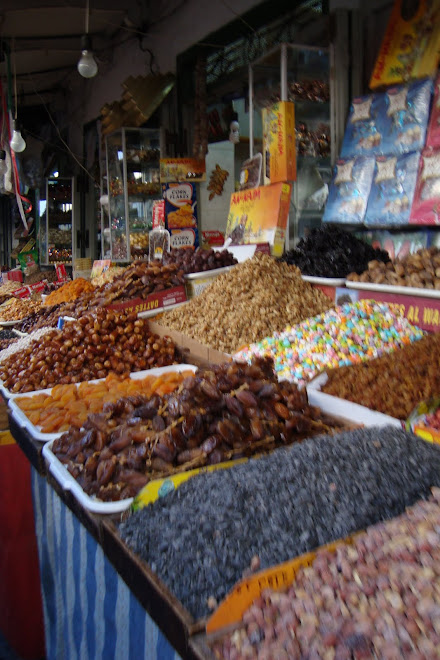
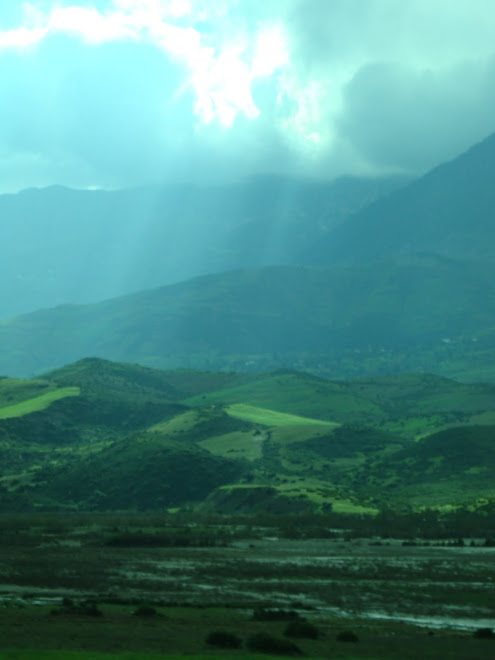
Obscure, some of the towns indeed were (we visited Chef Chuan and Tetuan in the lush green countryside of north Morocco), but certainly beautiful. And there was no need to walk around with a constant air of despair, our faces becoming one giant constipated balloon. The atmosphere, needless to say is vastly different; outer appearances are deceptive (one giant lucky packet!), so if the hotel sports a for star plaque and illustrious lobby, the rooms are likely to be crappy. So much was packed into those three days: we also visited Tanger, rode on camels, saw dancers and acrobats from the mountains and nearing cities perform, ate delicious spicy tagine and couscous, drank too much gunpowder tea with sugar and spent maybe a few too many dirhams (the currency used there; they do however also accept euro’s at a slightly elevated price per piece bought) and even experienced a first class disco in Tanger. The American music stopped at a certain point and a little live band started playing native music (the local girls then pull out all the stops and move their bodies serpent-like to the rhythm, wearing – against all odds – basically, um, nothing).
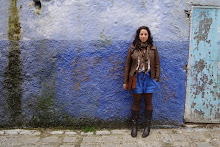
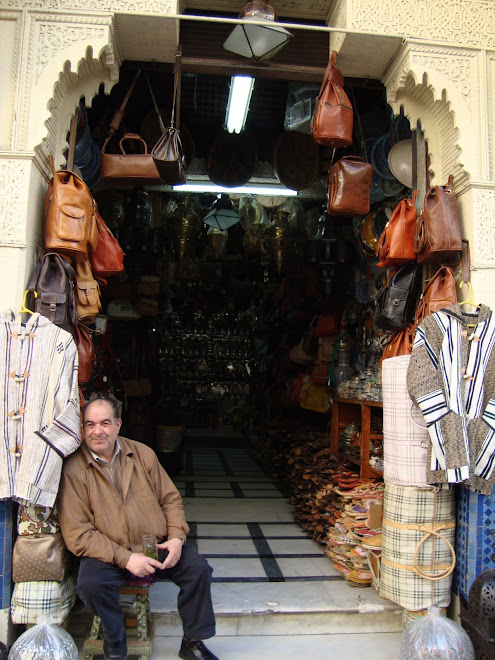
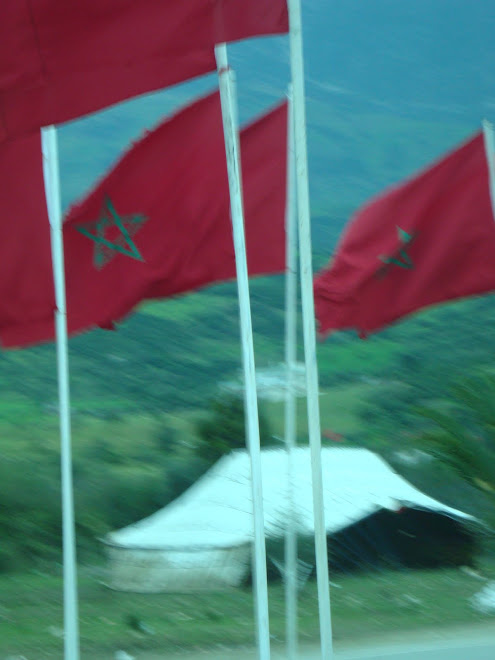
To attempt to sum up the experience, would be like asking to try and get the Spaniards to dislike soccer. Never going to happen. Nunca. Hopefully, these posted images will offer a taste of our sightings. . .
Off we treaded the next day to the Moroccan embassy, because even though we are from the same continent as our end destination, our South African passports mean squat. After a session of broken Spanish on our side and poor English on the lovely woman from the embassy’s side, we walked out about a half an hour later with two visas to visit the land of mint tea and hookah pipes. (Not even Germany delivers such good service!)
Obscure, some of the towns indeed were (we visited Chef Chuan and Tetuan in the lush green countryside of north Morocco), but certainly beautiful. And there was no need to walk around with a constant air of despair, our faces becoming one giant constipated balloon. The atmosphere, needless to say is vastly different; outer appearances are deceptive (one giant lucky packet!), so if the hotel sports a for star plaque and illustrious lobby, the rooms are likely to be crappy. So much was packed into those three days: we also visited Tanger, rode on camels, saw dancers and acrobats from the mountains and nearing cities perform, ate delicious spicy tagine and couscous, drank too much gunpowder tea with sugar and spent maybe a few too many dirhams (the currency used there; they do however also accept euro’s at a slightly elevated price per piece bought) and even experienced a first class disco in Tanger. The American music stopped at a certain point and a little live band started playing native music (the local girls then pull out all the stops and move their bodies serpent-like to the rhythm, wearing – against all odds – basically, um, nothing).
To attempt to sum up the experience, would be like asking to try and get the Spaniards to dislike soccer. Never going to happen. Nunca. Hopefully, these posted images will offer a taste of our sightings. . .
Subscribe to:
Posts (Atom)